Monday, 26 December 2011
City: Anton Furst
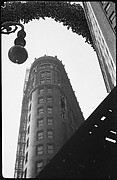
For this project, i am trying to show the darker side of the city. I looked at how the city is portrayed in films and television, and came across the designer Anton Furst. He was the production designer for the Tim Burton "Batman" films, for which he won an oscar. His dark noirish nightmare styled sets are a massive part in showing Gotham City as a dark place run by criminals.
These scenes are not unlike some parts of modern cities. The idea behind these designs is that the city was constantly expanding, and being built upon. Because of the lact of space, the city was built upwards on top of existing architecture. This is very similar to the expansion of New York City, which grew up as the population increased and space became less available.
In most of these scenes, the city is shown at night, and it made me think about how the city takes on a completly different dynamic. I want to try and show these changes in the city, comparing the differences between the daytime and night.
Tuesday, 13 December 2011
Body: Richard Avedon
My tutor introduced me to Avedon's work early on in the project, and the style of his photographs really appealed to me. I looked at his book "In the american west", as series of portraits focusing on the people living in the rural west.
The series was not about glamorising the people of this part of the country, but showing the day to day lives of the people who lived there. The models were ordinary people, not changed or dressed up, but photographed as they were. It was these details on the models that defined who they were, what they did, and how they lived.
The series contained 124 images, which were taken between 1979 and 1984. During this time, he travelled through 13 states, and visited 189 towns, taking these photos as he travelled. He used a 8x10 camera to capture his images, which gave a great depth of detail in his images.
All of the images were taken with natural lighting, although they look as though they are carefully planned studio photographs. I think that in the studio, i would be able to accurately recreate this look.
The series contained 124 images, which were taken between 1979 and 1984. During this time, he travelled through 13 states, and visited 189 towns, taking these photos as he travelled. He used a 8x10 camera to capture his images, which gave a great depth of detail in his images.
All of the images were taken with natural lighting, although they look as though they are carefully planned studio photographs. I think that in the studio, i would be able to accurately recreate this look.
Body: Finding the Model
I asked many different people to model for me, ranging from tatto artists, to people in bands, and a few who have normal every day jobs. I struggled to find people who would be available on the days i needed them. Eventually, i asked one of the members of a local hardcore band i watched in Chatham. His name is Dan Lloyd, and he played guitar in a band called Alaska from Thanet. After meeting with him a fair few times, he was really interested in the project i wanted to do, and was really happy to help out. This is some background information on my model.
Dan is 21 years old and lives in Ramsgate. He has been a part of the local music scene for years, playing with various different bands as a drummer, guitarist, and vocalist. His current band, Alaska, are a hardcore band that have toured the UK and Europe, and have a big fanbase around the south east and other areas.
He studied Music Tech in Bristol for a year before returning to kent and starting up his own home studio, in which he records bands from around the area. Currently, daniel is also training to be a tattoo artist.
Our discussions eventually came on to the topic of his tattoos, and how they would affect his future. As he doesnt have a conventional job, and has no intention of getting one, he see's no issue with getting completly covered with tattoos, but he does see the issues that people with tattoos on show have getting everyday jobs.
At the moment, Daniel has his full torso covered, and one full sleeve on his left arm. He also has a number of tattoo's covering his leg, some of which he has done by himself for practise. He said that as soon as he can find the right person, and the right tattoos to cover himself with then he will eventually be covered.
I was very fortunate to have found Dan, as we both have similar interests, and getting to know him before the shoot will really help in making the day less awkward for both of us. He hasnt had any previous modelling experience, but is excited to give it a go.
He studied Music Tech in Bristol for a year before returning to kent and starting up his own home studio, in which he records bands from around the area. Currently, daniel is also training to be a tattoo artist.
Our discussions eventually came on to the topic of his tattoos, and how they would affect his future. As he doesnt have a conventional job, and has no intention of getting one, he see's no issue with getting completly covered with tattoos, but he does see the issues that people with tattoos on show have getting everyday jobs.
At the moment, Daniel has his full torso covered, and one full sleeve on his left arm. He also has a number of tattoo's covering his leg, some of which he has done by himself for practise. He said that as soon as he can find the right person, and the right tattoos to cover himself with then he will eventually be covered.
I was very fortunate to have found Dan, as we both have similar interests, and getting to know him before the shoot will really help in making the day less awkward for both of us. He hasnt had any previous modelling experience, but is excited to give it a go.
Monday, 5 December 2011
Body: Pose, Costume, Lighting
To prepare myself for the upcoming body shoot, we've been doing a few workshops that have focused on using different lighting in the studio, as well as considering our subjects attire and body language, and how this can help us to achieve what we want to show in our photos. In the first of these workshops, we were using continuous lighting to light our subjects, and were given 4 different emotions to try and portray. Venerability, pride, intimacy and aloof.
Only using one light source, i had to focus on the subjects posture to try and create these emotions. I found this difficult through the day, and discovered that some emotions are alot easier to show than others. This is my contact sheet from the day.
Out of these shots, my favourite would have to be the middle top. This image was trying to portray venerability. I decided to make my model very small in the image, and had the camera aim from above her. I also used the shadow to emphasise this feeling of loneliness. Because of this i feel it was my most successful image. For my shoot, i am intending to show someone as being proud of their tattoo's without looking confrontational and conforming to a stereotype, so i will have to work on the proud look further before my shoot.
The second workshop involved showing peoples professions rather than emotions, and was meant to focus us on using different items of clothing to show these. Also this time round we used 2 flashes rather than a continious light. This ggave me a chance to experiment with the type of lighting i wanted to use on my final images. We has to pick 3 out of worker, intilectual, sales assistant, waitress and cleaner.
Tuesday, 29 November 2011
City: Deconstructing Environmental Photographers Pt 2
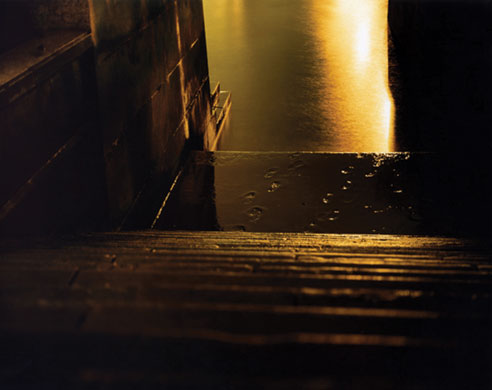
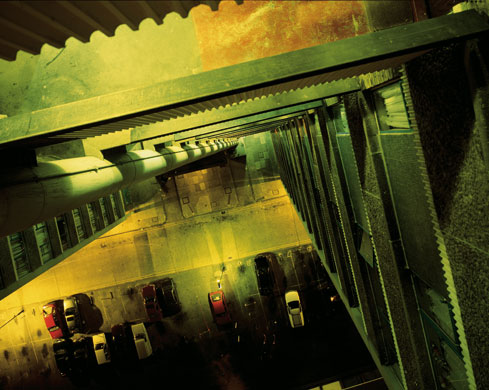
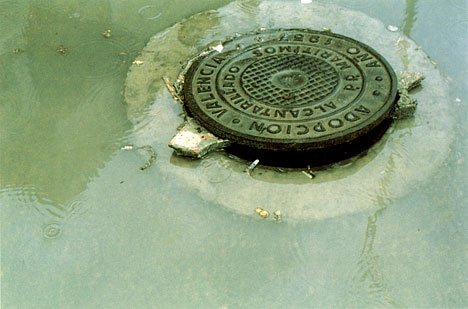
The first phtoographer im looking at is a german photographer called Rut Blees Luxemburg. As i have already researched this artists for this project, taking my main inspiration for my own work from her, i am well farmiliar with her techniques and concepts. Her work mainly explores the urban landscape at night, just using the lights available(streetlights/city lights), and slow shutter speeds to create her images. Her earlier work looks at the city in a much larger context, showing the hidden areas that you would not usually see. She does this by distancing herself from the loction, and including the busy city scape around it. In her earlier work Liebeslied (which translates to "Lovesong" in english) She approaches the city in a more intimate way. The same techniques are used, but the subjects of the images are completly different, focusing on the small details such as puddles and reflections of buildings.
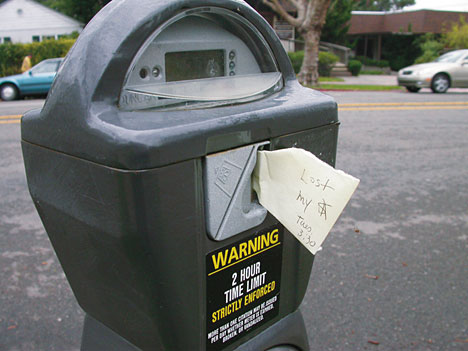
The second person i will be lookign at is Richard Wentworth, a british artist and sculptur.His photo series, Making do and getting by, vastly differes from Rut's work. Its main focus is on the everyday objects we see and use all of the time, but being put into a situation or being used for a purpose that they were not designed for. For example, a book being used to balance a table, or a boot being used as a door stop. The work starts to challenge our ideas of what these objects symbolise in their new positions. Unlike most of Rut's work, there is also a more defined anrrative within eash of Wentworth's images.
The final artist is another german born photographer, called Vera Lutter. Her work is again completly different to those of the previous two artists. Her images are created by using a room as a camera obscurer, and hanging large pieces of black and white phtoographic paper on the opposite wall and making large negatives of the view. These images are one off pieces, and are always negatives. This is the most litteral view of the city, as the images rely heavily on the room in which she is taking the picture from. Her work simplifies the city to just the buildings and surroundings. The extremly long exposure times needed to create these images mean that all life/movement in the image is lost, and all that is left is the defining buildings. Out of the 3 artists, i believe this work is the most honest and true representation of the city. The others have the luxury of being able to focus on elements of city life or the landscape. This work shows the city stripped of its people and shown at its rawest form, both in the sense that it is void of movement, and also that it is portrayed as a negative and void of colour.
Tuesday, 22 November 2011
Body: Tattoo Culture
My initial thoughts for this project is to look at modern day tattoo culture. I am in a band, and i spend alot of my time around people who are part of a punk/hardcore scene in which tattoo's are common place. In a time where is seems tattoos are being frowned upon more and more by the general public, i want to see why people feel the need to be covered in tattoo's, and if they consider how it will effect their future.
To gain a better understanding of how these people with tattos feel about this, i devised a short questionaire, and sent it to some people who have alot of tattoo's to fill in. Some of these people are tattoo artists, whilst others are just people who have tattoos that range from a few pieces, to full coverage.
Name
Tom
Age
22
How many tattoos do you have?
Thirteen or so...
How old were you when you got your first tattoo?
I was nineteen.
What is your first tattoo, and what is the meaning behind it?
My first tattoo is on the arch of my foot and I have the words "Enjoy Eternal Bliss" it's the title of an EP by a band called Yndi Halda and it's also what Yndi Halda means in old norse. It's one of my favourite artists and favourite pieces of music, plus it's a very positive message.
Do you feel the rest of the world see's you differently because of your tattoos, either for better or for worse?
I had a few tattoos before I got any visible ones and noticed no change. Once I'd gotten my lower leg tattooed I noticed people staring in public when I wore shorts. It was a novelty at first, then it annoyed me and then I just got over it and I don't even take notice anymore. In fairness my appearance before tattoos was slightly controversial, long hair and a beard always brought me looks from the public but I think tattoos added to that. People are often surprised to find that I'm a very nice polite person and not a thug.
Would you get tattoos that couldnt be covered (neck/hands/face)? If you have already, what made you decide to get these done?
I really like the idea of getting my hands, knuckles tattooed and even my throat but I'd never pursue the idea. Although I don't believe it should, it does affect your career choices in the future. My goal at the moment is to be a teacher but no school will hire someone with their throat tattooed to teach gcse english!
Do you think there is a pressure on this generation to get covered in tattoos?
I don't think there is a pressure to get COVERED but I think there may be some people who feel that they need a tattoo to fit in with certain social groups. I'm part of the hardcore punk scene and tattoos are very prominent but I've never felt that I NEEDED tattoos to fit in. I think some people may think that they do but I think that's more down to strength of character than social pressures.
Do you think tattoos these days have less meaning behind them than they used to?
For me personally a tattoo doesn't need to have a specific meaning behind it. If it does then that's great but because of programs like Miami/LA/London Ink, people think they need a sob story to get a tattoo. At the end of the day, tattooing is just an art form and if you appreciate art and would like to use your body, essentially as a canvas then you shouldn't feel that you can't get an image because it doesn't have a specific "meaning".
How much further will you go with your body art?
I intend to get my back and torso tattooed as well as sleeves on both arms and legs. I may venture onto my hands, knuckles and throat but not until I'm financially secure.
Name
Dan
Age
26
How many tattoos do you have?
Hard to count really as background work interlinks them. I'd say around seventy percent coverage.
How old were you when you got your first tattoo?
Eighteen of course ;-). Nah I was seventeen and I basically blagged though the whole thing and managed to not get IDed. Hard to believe as I still at twenty-six have the face of a sixteen year old.
What is your first tattoo, and what is the meaning behind it?
It was the logo from a band I was in to at the time. Unfortunately, or fortunately I revisited that band as an adult and realised it really was a poor choice. Said tattoo is now covered.
Do you feel the rest of the world see's you differently because of your tattoos, either for better or for worse?
I think it used to, but not so much any more. Reality TV shows have kind of killed the whole mysterious element of the tattoo world. Most peoples Mums have them now.
What influenced your decision to get a tattoo in places that cant be covered up (neck/hands/face)?
To start off with I never planned on touching "public skin". But then having a sleeve was a big deal. I was like eighteen or nineteen and had as many tattoos as my tattoo artist. I think I just wanted to raise the bar a little bit. Eventually I just found the right design and went for it. It certainly wasn't something I went blindly in to. I knew I was never going to work a nine to five office job, so why not?
Do you regret the decision to get these tattoos?
Not at all. I get a little annoyed with the constant stupid questions, but a lot of that is general ignorance.
How do you think it will affect your future?
I'm not sure to be honest. Having worked hard to get in to the industry myself, I hope it wont make any difference. My only concern is how much longer tattooing has got left. The lack of regulations and the ease of DIY tattoos is getting out of hand. The amount of Joe Public getting public skin tattoos that employers are not wanting. I know for a fact that Tesco are looking to get rid of tattoos in their work place, encouraging managers to find other reasons for dismissal. How long will it be before more and more companies decide to do this? Then at what point do the government get involved.
Do you think there is a pressure on this generation to get covered in tattoos?
I don't necessarily think it is pressure, but it is certainly in the lime light more than ever. Cher Lloyd for instance, even at seventeen was on the television at prime time with hand tattoos. Working in a tattoo shop I get to deal with literally hundreds of young girls looking to get hand tattoos like Cher Lloyd and Cheryl Cole, neck tattoos like Rihanna. None of these young girls have really thought about the consequences of having a tattoo they can never cover. We as a rule wont do these, but unfortunately there are hundreds of tattoo shops around the country that will.
Is it becoming a sign of social status?
I don't really think so. I think it is just the alternative kids trying to keep a line between themselves, and Mr Religious Tattoo.
Do you think tattoos these days have less meaning behind them than they used to?
The notion of tattoos having real meanings died many years ago, but even then I not sure they were meant to have as much meaning as we try to give them. Most of my tattoos are just stuff I think is cool, yeah I have a few bits with meaning, but I'm certainly not going to try and have a deep meaning to every one. I think people watch a bit too much Miami Ink. Having six stars to represent your six kids is not a meaningful tattoo,
It's a falsified justification to having a trendy tattoo so no-one will judge you.
How much further will you go with your body art?
Pretty much full coverage. I've dabbled a bit with scarification, so probably when I'm completely covered I will start blacking bits out and having it cut out. The progression that it has made in the last few years is outstanding so by the time I'm at that stage it should be mind blowing.
Name
Ryan
Age
21
How many tattoos do you have?
7
How old were you when you got your first tattoo?
21
What is your first tattoo, and what is the meaning behind it?
The first one I got was the letters TKS on my thigh. It was done by one of my best friends at a show he put on in a kitchen. About 15 of us have the letters on us, which stands for Toms Kitchen Shows, it is a reminder of the good times we all had at shows there.
Do you feel the rest of the world see's you differently because of your tattoos, either for better or for worse?
I’m sure people do see me differently because of them but I quite enjoy the funny looks you get from random people, that is probably tattoos making it worse but then in my friend group and the scene of the music I listen to people love tattoos so people probably see it for better in that group. I don’t really care too much on other peoples thoughts of them anyway.
Would you get tattoos that couldnt be covered (neck/hands/face)? If you have already, what made you decide to get these done?
I plan to eventually, apart from the face, I’m just not a fan of them. It won’t be until everywhere else is covered though because as cringey as it sounds I think you have to ‘earn’ them. People that get these tattoos first/early on piss me off.
Do you regret any of your tattoos?
None at all
How do you think they will affect your future?
Hopefully they won’t, but I’m sure if I go for a job interview there will always be some old man that looks down on me for them. They are pretty accepted these days I think though.
Do you think there is a pressure on this generation to get covered in tattoos?
Not really. I got my first tattoo at 21 after being friends with loads of people that were tattooed and I never felt pressured to get any. There are probably people that feel they have to get them to look cool but if they want to do that it is up to them. Peer pressure sucks.
Is it becoming a sign of social status?
I think so partly. Whenever I see people with tattoos these days I tend to already assume I know what music they listen to etc. Most of the time it is a correct assumption but it is still stereotyping.
Do you think tattoos these days have less meaning behind them than they used to?
I don’t really have any meanings behind any of my tattoos apart from my TKS tattoo and my band tattoo. I don’t see the need to have a meaning behind them, it is okay to get something because they look good. We aren’t on Miami ink.
How much further will you go with your body art?
I plan on getting completely covered. It will take some time/money but it looks good and getting tattooed is very addictive I find.
Name
Ryan
Age
21
How many tattoos do you have?
7
How old were you when you got your first tattoo?
21
What is your first tattoo, and what is the meaning behind it?
The first one I got was the letters TKS on my thigh. It was done by one of my best friends at a show he put on in a kitchen. About 15 of us have the letters on us, which stands for Toms Kitchen Shows, it is a reminder of the good times we all had at shows there.
Do you feel the rest of the world see's you differently because of your tattoos, either for better or for worse?
I’m sure people do see me differently because of them but I quite enjoy the funny looks you get from random people, that is probably tattoos making it worse but then in my friend group and the scene of the music I listen to people love tattoos so people probably see it for better in that group. I don’t really care too much on other peoples thoughts of them anyway.
Would you get tattoos that couldnt be covered (neck/hands/face)? If you have already, what made you decide to get these done?
I plan to eventually, apart from the face, I’m just not a fan of them. It won’t be until everywhere else is covered though because as cringey as it sounds I think you have to ‘earn’ them. People that get these tattoos first/early on piss me off.
Do you regret any of your tattoos?
None at all
How do you think they will affect your future?
Hopefully they won’t, but I’m sure if I go for a job interview there will always be some old man that looks down on me for them. They are pretty accepted these days I think though.
Do you think there is a pressure on this generation to get covered in tattoos?
Not really. I got my first tattoo at 21 after being friends with loads of people that were tattooed and I never felt pressured to get any. There are probably people that feel they have to get them to look cool but if they want to do that it is up to them. Peer pressure sucks.
Is it becoming a sign of social status?
I think so partly. Whenever I see people with tattoos these days I tend to already assume I know what music they listen to etc. Most of the time it is a correct assumption but it is still stereotyping.
Do you think tattoos these days have less meaning behind them than they used to?
I don’t really have any meanings behind any of my tattoos apart from my TKS tattoo and my band tattoo. I don’t see the need to have a meaning behind them, it is okay to get something because they look good. We aren’t on Miami ink.
How much further will you go with your body art?
I plan on getting completely covered. It will take some time/money but it looks good and getting tattooed is very addictive I find.
Monday, 21 November 2011
City: Deconstructing Environmental Photographers
The first image is "the Flatiron, New York" by Edward Steichen, taken in 1905. The composition of this image is very condisered. The photographer has chosen to show the building as a part of the background of the image rather than in the foreground, which is taken up by tree branches and people walking around. The image was taken in a time when the population of new york city was on the rise, so the city was expanded up rather than out. The building isnt contained in the image, just being cut off at the top, which emphasises the height of this towering structure. The original image was a platinium print, to which Edward added colour to create the twilight effect that isnt very clear from the original print.
The next image is by Alfred Steiglitz. This image was taken about 2 years before the previous image, and so was still around the time of this New York skyline expansion. Again this image has a very considered composition, the use of horizontal lines emphasizing the height of the building. The foreround is dominated with trees and nature. Even the crop of the image ephmasizes the buildings height, being cropped to be very tall and thin. The image looks as though it has been taken at a very low aperture as everything from background to foreground is in focus.
Alvin Landon Coburn takes a very similar approach to photographing the building as the previous 2 artists, featuring it in the background, with trees and people being predominant in the foreground. the building again is shown as this towering structure on the skyline, although the people in the image appear oblivious to it as if its of no real importance.
The fourth image takes a completely different approach to the previous 3. It is taken by Walter Gropius in 1928. Where as the previous images are very dark, and speak of the hardship that the country was undergoing at this time, this image is more in admiration of the building. It features just the building, but at an angle, almost like the composition wasnt important, only that the building fit in the image. Of course this wasnt the case, as the artists took time to compose this image.
`this image by Walker Evans is probably the most set apart from the rest of the images. Although it does feature other things in the foreground, such as the light and the other building, it also focuses specifically on the building, so you see the detail of the building. This image was also taken in 1928.
Finally this is an image by Berenice Abbott, taken in 1938, the most recent of the images i have looked at. The tonality of the image is very similar to that of Walter Gropius' image, although the composition is different, and presents the building in a different way. Where at Walter's image portrayed a certain instability, this image gives a sense of strength. As this was around t he time that america was starting to get back on its feet financially, this could be what the image is representing.
The next image is by Alfred Steiglitz. This image was taken about 2 years before the previous image, and so was still around the time of this New York skyline expansion. Again this image has a very considered composition, the use of horizontal lines emphasizing the height of the building. The foreround is dominated with trees and nature. Even the crop of the image ephmasizes the buildings height, being cropped to be very tall and thin. The image looks as though it has been taken at a very low aperture as everything from background to foreground is in focus.
Alvin Landon Coburn takes a very similar approach to photographing the building as the previous 2 artists, featuring it in the background, with trees and people being predominant in the foreground. the building again is shown as this towering structure on the skyline, although the people in the image appear oblivious to it as if its of no real importance.
The fourth image takes a completely different approach to the previous 3. It is taken by Walter Gropius in 1928. Where as the previous images are very dark, and speak of the hardship that the country was undergoing at this time, this image is more in admiration of the building. It features just the building, but at an angle, almost like the composition wasnt important, only that the building fit in the image. Of course this wasnt the case, as the artists took time to compose this image.
`this image by Walker Evans is probably the most set apart from the rest of the images. Although it does feature other things in the foreground, such as the light and the other building, it also focuses specifically on the building, so you see the detail of the building. This image was also taken in 1928.
Finally this is an image by Berenice Abbott, taken in 1938, the most recent of the images i have looked at. The tonality of the image is very similar to that of Walter Gropius' image, although the composition is different, and presents the building in a different way. Where at Walter's image portrayed a certain instability, this image gives a sense of strength. As this was around t he time that america was starting to get back on its feet financially, this could be what the image is representing.
Subscribe to:
Posts (Atom)