My idea evolved throughout this entire project. I started looking at how much of the environment we use, wether it be land or resources. I looked at photographers who focused on the environment, such as Edward Burtynsky, and his work around the industrial parts of China. Since then with my reshoot, ive started looking not at just how much we use, but also how much we waste, and the disregard there is for the environment, especially in more industrial places. This idea took me to the island of Sheppy, which is full of factories and business that flood the air with gasses on a daily basis. I went around the smaller companies, and the lands around their factories to see the state in which they were kept, and was shocked to see how little they care about the immediate environment.
My final images were all taken in the small town of Queenborough on the Isle of Sheppy. I shot on medium format, as i wanted to capture as much detail in the surroundings as i could. I would have liked to have shot on large format, but i had to be fairly quick as some of the places i went to werent open to the public. I tried to vary the content of my images, whilst keeping to the theme, and i felt that i have done that quite well. Having to resubmit this project really gave me the opportunity to look into the subject more, and take it alot more seriously.
I plan on contuining this study into the environment beyond this project, as it is a subject that intrigues me.
Some of the things i would like to have done better with this project, is to plan my time and shoots better. I struggled with orginizing shoots and getting out and taking pictures. I would also like to have travelled further afield, and documented a greater variety of this type of waste.

Showing posts with label environment. Show all posts
Showing posts with label environment. Show all posts
Tuesday, 6 March 2012

Environment: Reshoot
After failing this project, and given the chance to resubmit, i was able to expand my idea of destruction and disregard of the environment. Ive looked at the damaging effect that industry has on the environment. For this, i decided to go to the Isle of Sheppy, which is full of factories and businesses, large and small.
For my shoot, i used a Bronica with a 6x4 back. I chose to use this instead of using the square format because i pefered being able to choose wether my image was portrait or landscape, without having to crop in the darkroom. I used 1 roll of Fujifilm PRO 400h around the small town of Queenborough.

Out of these images, i chose the 3 that i felt worked well together, and also showed this idea of wastefulness and disregard of the environment.
The first image i took was of some fencing around an olf train repair yard. The fence interested me, as in the middle of it was a small tree that had been built into the supports of the fencing. It seemed interesting that this fence was reliant on the tree as support, yet the company had no regard for the environment. Also, the aliminium sheets that made up the fence reminded me of a city skyline.
I started off making a test strip to find the correct exposure:

From this, i worked out that a good exposure time would be inbetween 5 and 10 seconds (closer to 10) so i did another test strip for 8 seconds, and came up with this exposure.

To reduce the amount of blue in the image, i reduced both the yellow and magenta. I meant to reduce them both by 10, but i accidentally reduced them both to 50. Luckily, this turned out to be exactly what i wanted, and came out with this for my final print:
 My second final image was taken right opposite this fence. I wanted to look at the amount of rubbish and waste that was just lying around. There was a recycling bin in the yard that i was standing in, but it looked completly unused, whilst stuff was all over the floor.
I made another test strip for the exposure. As both this and the first image were taken under similar light conditions, i guessed that the exposure would be the same, but i made the test strip to make sure.

10 seconds again seemed to be around the right exposure time, maybe just a little to dark, so i made another strip, this time at 9 seconds. I had chosen not to reset the colours back to their default settings in hope that i would achieve a similarly correct exposure.

I liked the colours that came out in this strip. They werent perfect, being a little to yellow/green. But i liked this slight offset as it emphasised the idea that this was a rather dirty place. I therefore decided to make a print with these settings.

The third image was of a riverbed that ran past one of the factories. All dried up, it was full with rubbish and industrial waste, including scrap metal and bricks.

Again, i left the colour settings as they were, and as i was running short on time, i decided to just make a print straight away and see how it went. I decided that this time 10 seconds needed darkening down just a tiny bit more, so i set the exposure for 11, and this was the result.
 I was really happy with the result, and out of the three images, this one was my favourite. The sense of decay and disregard in this image is emphasized by the colour, especially the grass.

For my shoot, i used a Bronica with a 6x4 back. I chose to use this instead of using the square format because i pefered being able to choose wether my image was portrait or landscape, without having to crop in the darkroom. I used 1 roll of Fujifilm PRO 400h around the small town of Queenborough.

Out of these images, i chose the 3 that i felt worked well together, and also showed this idea of wastefulness and disregard of the environment.
The first image i took was of some fencing around an olf train repair yard. The fence interested me, as in the middle of it was a small tree that had been built into the supports of the fencing. It seemed interesting that this fence was reliant on the tree as support, yet the company had no regard for the environment. Also, the aliminium sheets that made up the fence reminded me of a city skyline.
I started off making a test strip to find the correct exposure:

From this, i worked out that a good exposure time would be inbetween 5 and 10 seconds (closer to 10) so i did another test strip for 8 seconds, and came up with this exposure.


To reduce the amount of blue in the image, i reduced both the yellow and magenta. I meant to reduce them both by 10, but i accidentally reduced them both to 50. Luckily, this turned out to be exactly what i wanted, and came out with this for my final print:

I made another test strip for the exposure. As both this and the first image were taken under similar light conditions, i guessed that the exposure would be the same, but i made the test strip to make sure.

10 seconds again seemed to be around the right exposure time, maybe just a little to dark, so i made another strip, this time at 9 seconds. I had chosen not to reset the colours back to their default settings in hope that i would achieve a similarly correct exposure.

I liked the colours that came out in this strip. They werent perfect, being a little to yellow/green. But i liked this slight offset as it emphasised the idea that this was a rather dirty place. I therefore decided to make a print with these settings.

The third image was of a riverbed that ran past one of the factories. All dried up, it was full with rubbish and industrial waste, including scrap metal and bricks.

Again, i left the colour settings as they were, and as i was running short on time, i decided to just make a print straight away and see how it went. I decided that this time 10 seconds needed darkening down just a tiny bit more, so i set the exposure for 11, and this was the result.

Saturday, 3 March 2012
Environment: Location Hunting/Reshoot
With the re-shoot of my environment project, i decided to take a different approach with the project. Before i had focused on roads/construction sites and expansion. This time i've tried to broaden my focus by looking at the industry's effect on the environment right now, and the effect its having on the landscape.

 The first place ive looked for locations on this project is the isle of Sheppy. A small island off the south east coast, the whole area is covered in factories and business, that generate alot of waste. I went to the town of Queenborough, which is home to Sheerness Recycling, a company that deals with the recycling of commercial waste. Unfortunatly, they wouldnt let me on site to take any pictures, but there is a sea wall right next to it which is acessable to the public so i scouted out the area from there.
Other locations i looked at around the island were a few companies such as Olympic Glass, and the waste they produce. Again this company wouldnt let me onto their site, but ive sent them emails asking for special permission so i am hopefull they will reply soon.
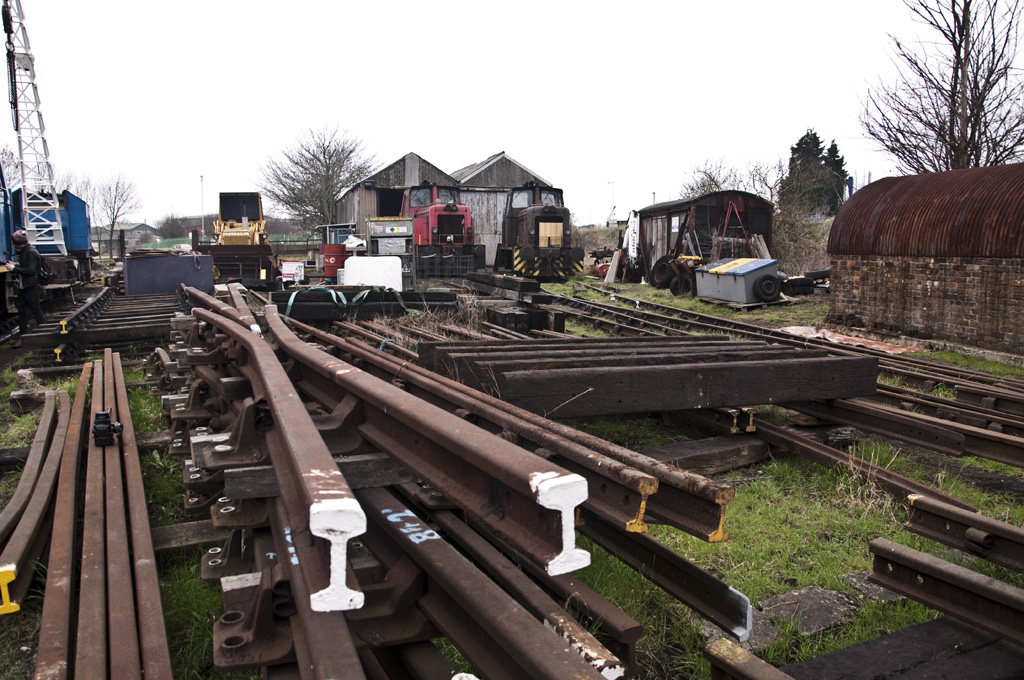
 I did get to look around a site whilst there. It was a small company that dealt with the repair and maintance of the rail service on the island. Alot of the bigger companies use a network of railways to transport materials around. On the site, there was loads of old rails, and old trains lying around, under repair, or just not being used. I talked to the man who was working there at the time, and he told me that he maintains the engines of the trains used, and revives old trains so that they can be used again.


Other locations i looked at around the island were a few companies such as Olympic Glass, and the waste they produce. Again this company wouldnt let me onto their site, but ive sent them emails asking for special permission so i am hopefull they will reply soon.

Thursday, 12 January 2012
Environment/City: Critical Appraisal
For my environment unit, I chose to look at the effect that we have on the environment. I started by researching the artist Mitch Epstein. His work depicting the growing population of China, and its effect on their landscape was my main inspiration for the project. After the critique of my first shoot, I realised that I needed to continue shooting, as my first images didn’t show this idea of expansion. I wanted to build up a much larger collection of images for this project, but I struggled in finding places that matched what I wanted to photograph. After my second shoot, I had 3 images I was happy with, although I had had to shoot them on a 35mm camera. Due to this I printed some of the images smaller to retain detail, but I was overall happy with my final prints.
The city I found a lot more difficult. My initial thoughts for the project were to look at the unseen parts of the city, but due to an error whilst shooting, I had to complexly rethink my approach with the time I had left. It was at this point that I came across the work of Bruce Gildan, who specialised in street photography. I started to shoot around the city of Canterbury, photographing people walking the streets without making myself to obvious. I shot a single roll of black and white 35mm film, and managed to take 5 images I was happy with. I had wanted to use medium format for the shoot, but the relatively small size of the 35mm slr meant that I could be as inconspicuous as possible.
Saturday, 12 November 2011
Environment: Further Work

Wednesday, 2 November 2011
Environment: Critical Appraisal
Environment: Are we using too much?
My initial thoughts for this project were all based around taking photos around the country side and finding beautiful landscape, but as the project progressed, it became apparent that around here I wouldn’t be able to find such locations. Living in a town as large as this, which is always expanding, its hard to find somewhere that’s still untouched and undeveloped. Because of this, I changed my project idea to concentrate on showing how much of the landscape we use.
 I started researching photographers who’s work focuses on similar points, most importantly of whom was Edward Burtynsky. His imagery shows the effect that industry (mining/oil/manufacturing) has on the landscape. In particular, I looked at his collection of images entitled “Urban Renewal”, which looks at the growing population of China, and how they cope with increasing numbers of people.
The government in China own all the land, but citizens are allowed to use it until the government chooses to take it back to be developed on. This happens more and more now, leaving people homeless, and also leaving no natural undeveloped areas.

Another photographer who’s work I looked at was Robert Adams. His work focused on the changing American landscape, in a time when large cities were being expanded, and people were moving out into the wilderness. In particular, his series entitled “Summer Nights” looks at the difference between the city, and the rural areas outside. All of the images were taken at night. This is something that I wanted to experiment with on my shoots, but when I started taking photos, I realised that they would look better during the day.
My final images are taken around the area of the River Medway, and around the industrial areas surrounding it. I was looking at this open area of grass by the river, and how it would most likely be developed on just like the rest of the river banks. I looked at how uncared for the area looks, and the effect that the industrial waste and boats have on the river itself.
This project initially seemed fairly easy from a practical point of view, but as I worked further into it, I realised how much signs in photographs influence the meaning behind the image, and how that is transferred to the viewer. I feel that if I could revisit this unit, which I will be doing, that I can work harder at making images that say what im trying to put across to the audience.
Environment: Edward Burtynsky

Whilst researching artists who look at our effects on the environment, i found the work of Edward Burtynsky. Almost all of his work concentrates on how humans effect and abuse the planet, wether it be its resources, or through pollution. In particular, i looked into his work called Urban Renewal.

The poplulation of china is nearly 524 million, which causes a number of problems for the Chinese government, especially with finding places for these people to live. The following is a quote from Edward Burtynsky's website:
"The government owns all land in China, but people have the right to use or occupy the land. Shanghai City’s plan to modernize has developers from around the world eager to jump into the game. Many of central Shanghai’s old houses sit on the most desirable parcels of land. Often citizens will be notified of their residential termination by the sudden appearance of the (now ubiquitous) Chinese character (Chai – demolish) painted on the outside of their building. Under Chinese law the government will provide substitute housing for residents of redevelopment areas, even if these substitutions are located hours away in the suburbs. To some, the idea of moving into a new apartment that has functional interior plumbing with hot water, something often lacking in older houses, is a welcome change.
But to many, the idea of dismantling their community, moving away from neighbors and not receiving satisfactory compensation for prime real estate is a battle worth fighting—enter the Dingzihu or ‘Hold outs.’ Scattered all over Shanghai today one can see lone houses or parts of larger buildings surrounded by rubble where a neighborhood once stood. It’s here, where maverick residents decide to make a last stand to preserve their lifestyle and dignity. Developers are now frequently accused of using heavy-handed tactics to edge the older residents out. This has become the fastest growing source of protest—the forcible eviction of millions from their city homes and farms to make way for profitable new construction projects."
But to many, the idea of dismantling their community, moving away from neighbors and not receiving satisfactory compensation for prime real estate is a battle worth fighting—enter the Dingzihu or ‘Hold outs.’ Scattered all over Shanghai today one can see lone houses or parts of larger buildings surrounded by rubble where a neighborhood once stood. It’s here, where maverick residents decide to make a last stand to preserve their lifestyle and dignity. Developers are now frequently accused of using heavy-handed tactics to edge the older residents out. This has become the fastest growing source of protest—the forcible eviction of millions from their city homes and farms to make way for profitable new construction projects."
Environment: The Shoot
Due to technical issues i had with the medium format camera i borrowed, i had to redo my shoot with my 35mm camera. The location for this was around the banks of rochester. I wanted to try and show the poor conditions of the area, and how much of it is dominated by industrial buildings.

These are my selected negatives from the shoot. As i was not able to get into the darkroom to print my images, i have had to digitally scan them, and adjust the final colours in photoshop. This has meant i was able to adjust the images far more than i could in the darkroom, but digital images are no where near as good as proper prints.

My first final image was of the river itself. Due to the large amount of traffic that passes through the river, as well as the disgusting amount of rubbish that is thrown into it by people, the water is murky and void of visible life. I chose to leave the rough border left by the negative scanner as i felt this emphasised the destruction of the environment i was trying to show. I have adjusted the colours slightly, giving the image a blue tint.

My second image is again from the banks of the river. This time i wanted to show how much of this land is being developed on rather than being conserved. I found the men at work sign lying around from a previous construction site, and propped it up against the fence.

My final image is trying to show the relation between this area and the town that is steadily growing onto it. As this seems to be one of the last undeveloped areas around Rochester, it was perfect to show this point.
Tuesday, 1 November 2011
Environment: Pastiche of Jem Southam's "Seaford Head"

This is the image i have chosen for my pastiche. Coming from a costal town, this is a site i am all to farmilliar with, and think i could accurately recreate. To try and make my image have the same feeling as this one, i first have to annalyse the image, and work out what technical techniques have been used, aswell as what information the image is trying to portray and been inspired by.
Taken on a 8x10 camera, like the rest of Jem's work, there is a vast amount of detail captured in the image. As i wasnt able to get hold of an 8x10 camera for my shoot, i had to use Medium format as a replacement. From looking at this image, i get a feeling that Southam is trying to show the impact of nature on the coastline. These rock falls from the cliffs are usually caused by years of abuse from the sea. The composition of the image is gives a strong direction through the image. All of lines in the image from right to left follow down into the sea, even though it is only a very small part of the image.
For my shoot, i went to the seaside down of St Margarets Bay in south-east Kent. This is a location i had visited many times as a child, so i knew that it would be perfect for this particular shoot. Unfortunatly, the tide there doesnt go out as far as i thought it would, and when it did finally go out enough for me to take the photo, the sun decided to come out and spoil the dark moody sky i was looking for. As it turned out, these were the least of my problems, as the camera i had borrowed had a fault, which meant that the film back would keep popping open and fogging my films. It clearly wasnt my day.
For my shoot, i went to the seaside down of St Margarets Bay in south-east Kent. This is a location i had visited many times as a child, so i knew that it would be perfect for this particular shoot. Unfortunatly, the tide there doesnt go out as far as i thought it would, and when it did finally go out enough for me to take the photo, the sun decided to come out and spoil the dark moody sky i was looking for. As it turned out, these were the least of my problems, as the camera i had borrowed had a fault, which meant that the film back would keep popping open and fogging my films. It clearly wasnt my day.
After wasting 3 films, i called it a day assuming all was lost. I developed my films anyway to see if anything had survived, and somehow 1 image managed to not become fogged!

This is a digital scan of the negative, as i have not yet had a chance to get into the darkroom to print. I was pretty happy with this image, luckily it was the first image i took that day and was rolled up tight int he camera when it opened. The colours of this image have been adjusted slightly, adding a more red/yellow tint to the image to go with the cliffs of the original. This has given me an idea of what ill need to adjust colourwise when it comes to going into the darkroom to print.
Environment: Are we using to much?
Later on through the project, i started looking at how we treat the area around us. Living in an ever expanding world, humans are always taking more and more land and developing on it. And whats worse is that whats left, we dont even care for or maintain.
Its this lack of respect for nature that i want to focus on for the Environment Unit. Just looking around the local area, its clear that there is alot more attention/money put into the development of new buildings or shops than there is of cleaning up and sorting out the nicer areas that we already have.
Its this lack of respect for nature that i want to focus on for the Environment Unit. Just looking around the local area, its clear that there is alot more attention/money put into the development of new buildings or shops than there is of cleaning up and sorting out the nicer areas that we already have.
I conducted a test shoot around the river banks of rochester, looking at the factories and work places that had been set up all along them. Even though this side is still grass and potentially somewhere nice to walk, there are signs of disregard and destruction all along, as well as the beginnings of a construction of new flats. Unfortunatly, these test shots were ruined when my camera back decided to pop open and fog the images, but i had taken notes and sketched out some ideas of what i wanted to photograph, so i could return with another film and shoot again.
Wednesday, 12 October 2011
Deconstruction: Mitch Epstein
Out of the list of photographers i was asked to look at, the work of Mitch Epstein really stood out to me. He is an american photographer, and im going to be looking at his work on the city, and the social commentry he makes through it.

This is the first image i am going to anylise. The image depicts an area of new york, probably not on the island of manhatten, with the city skyline on the horizon. The lack of colour in the image gives it a moody look to go with the stormy weather. The photographer has obviously gone to the top of one of these buildings to take the photo, and has picked a location that has made the twin towers feature prominantly in the image. He has also waited for a break in the clouds, which has framed these buildings and the rest of the city skyline.
These choices the photographer was trying to show a contrast between the high end business side of the city, and the less sophisticated outskirts, and the contrast between the types of people who reside in these areas. Again with the composition, the foreground is completly taken up with these blocks of flats, which extent to just over half way up the image. This focus on the foreground completly dominating the background could also be a comment on the large scale of lower working class citizens there are in and around new york, and that the "important people" who work in the city, are completly overcast by the majority of normal people who live there.

This image decides to take on a completly different idea on the city. The camera appears to be suspended high above next to these two security cameras. This may possibly be taken from on top of a bridge or tall building. The use of colour is very limited, only really showing a few greens around the city's edge. The composition of the image is very cleaver. The pole the cameras are mounted on is almost a mirror of the city's coastline. To me, this image is really talking about the american governments obsession with control and monitoring their people. This is an issue that can be related to over the whole world, and i think this is a very strong way of showing that point. The camera looks as though it is pointing down over the city, whilst the other one faces away, asif turning a blind eye to the goings on in the city. I think the scale of the cameras compared to the city is a way of saying that it is obvious and in our face that we are being monitered, and that we have no real control over it. Its a comment on privacy, and where the boundries between public and private are.
 The third image ive chosen to look at is another from Epstein's collection "The City". The main reason ive chosen to look at these images rather than the others he has made, is because i am very interested in the urban landscape, and what social/political commentaries you can show through these types of images. In comparison to the other 2 images, this has very little in the way of subject matter, but what is shown is very important. The image at first looks as though it is a natural picture, although with images like this, it would have to be set up so as not to pry into someones personal life. The scene in the bottom left corner shows someone laying completly naked in their bed. This image again crosses the boundries between public and private life, because its showing someing performing a very private act, but this person also has their curtains open and is displaying the act very publically.

Sunday, 2 October 2011
Environment: Initial Ideas
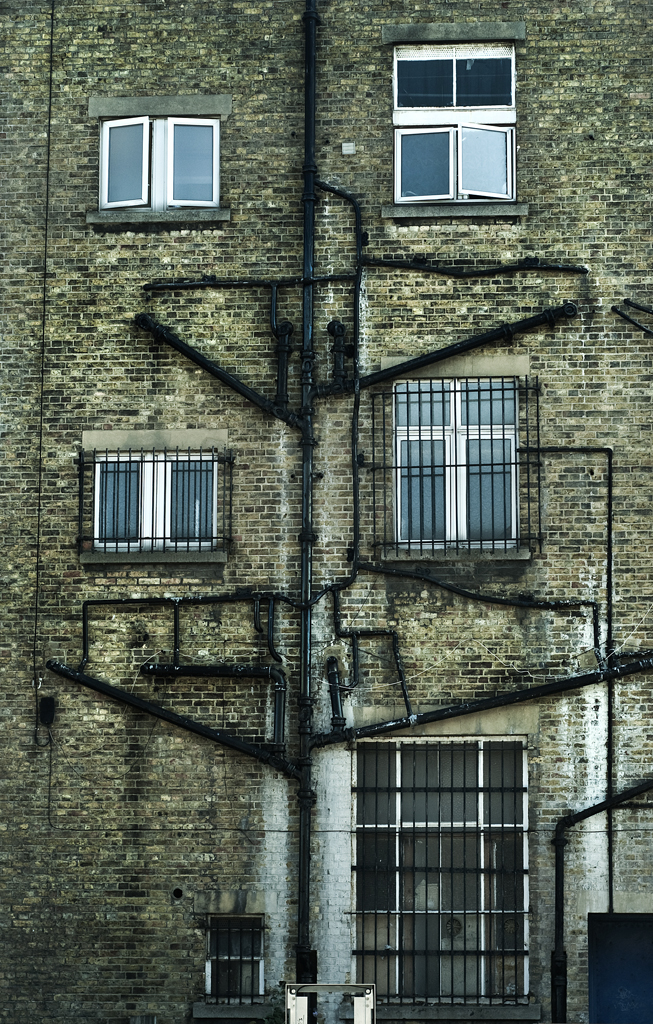
So i went out today with my camera, looking for inspiration for my environment project. I decided to show my impressions of chatham, and found a few locations that showed what the area was really like.


Subscribe to:
Posts (Atom)